This video, Your Digital Medical Records,
What You Need To Know, will help you understand how
to get your medical records, why you should request
your medical records, what you can do with your
records once you have them, and how you can protect
your health information. After years of visits to
primary care, physicians, specialists, hospitals,
pharmacies, and labs, you may have medical records
in many different places. By requesting your medical
records from these providers and organizing
them in one place, you can create a more complete
record of your health. Getting access to your
medical records and requesting any needed
corrections is your right under the Health
Insurance Portability and Accountability
Act or HIPAA.
Ask your provider
about the forms you may need to fill out. They may be
available online. Find out if your records
are kept electronically, so you can get a paper
or digital copy of your health records. A digital copy may
be more convenient.
Your provider or health
plan may charge you for the cost of making
a copy for you. Once you have your
health records, review thoroughly
and ask yourself, is everything correct,
is it complete, are all my allergies listed, is my medication list current? You can share your records
with family and caregivers so that everyone treating
you is informed. Why obtaining your medical
records is important? It can prevent
unneeded testing and procedures such
as blood work, x-rays, or antibiotic
treatment; helps track immunizations
or those of your child; provides vital and
accurate information in an emergency for
providers to use. Now that I have my
medical records, how do I protect them? Use a password on your home
computer or mobile device, update often, and do not share
your password with anyone.
Avoid public Wi-Fi or
insecure networks when accessing your
health information. Be careful when
using social media. Think before you post
anything on the Internet that you don't want
to be made public. Do not assume that an
online public forum is private or secure.
If you decide to post
health information on a social media platform, consider using the
privacy settings to limit others' access. Be aware that information
posted on the web may remain permanently. When using mobile devices,
research mobile apps and software programs
before you download and install any of them. Read the terms of service
and the privacy notice of the mobile app to understand
how your information may be shared
with third parties and how the vendor will
protect your information.
Consider installing or
using encryption software for your device. Install and activate
remote wiping and/or remote disabling on
your mobile devices. Visit these websites
for more information..
Now answering your questions about the law
and legal issues. This is Legal Break with attorney Gary Bruce. Maureen Akers here with Gary, thanks so much
for joining us today. Good to be here again, thank you.
We are talking about personal health insurance. So, if you've been injured, should you use
your personal health insurance to help pay for your medical bills? Well in a situation that I'm involved in,
generally when people are injured after a collision, or a fall, or something yes. I mean that's what you have it for. And so there are two terms of art that come
into play Maureen; one is reimbursement, and one is subrogation.
And you'll hear these things, what do they
mean? They mean, if at the end if you prevail, you
may have an obligation to reimburse your insurance company, or TRICARE, or whoever's paying the
bill. So, your insurance- your personal insurance,
really is not to determine whose fault it was, or where there might be a way to collect. I mean there's just so many variables there
you can't predict that. So, the health insurance was paid for, their
premium is paid.
It is there to provide service, or pay for
your services that you need, and then if you do collect, if you do prevail, then you have
to deal with that obligation to reimburse. Yeah, I mean you definitely shouldn't sit
and wait on your health care though, and in a lot of cases: you can't. It's serious enough that you're taken care
of first. Surprisingly, people run into problems going
to see their primary care physician, and other health care providers.
Sometimes he'll say, oh we can't use the
insurance, you have to pay cash, or we don't see you if you've been involved in a motor
vehicle wreck because we don't know how we're going to get paid. The way to get paid is to use the same health
insurance that they've always used. And then, we do have an obligation as lawyers
to deal with that issue at the end. We have to we have fiduciary duty, we have
a legal obligation to deal with reimbursing Medicare, Medicaid, your health insurance,
TRICARE, all of these organizations.
So, does the person get reimbursed by the
insurance company, or no? We're saying that the insurance company just
gets reimbursed if theyre not the ones responsible. Well it depends on what insurance company
youre talking about. So, if you're talking about the liability
insurance company that may pay for your damages, they're not gonna pay for you to go to the
doctor, they don't want you to go to the doctor, they don't want you to be seen, they won't
pay until the end in a lump sum. So, how do you deal with it in the meantime? Hopefully your healthcare provider is submitting
the bills to your personal health insurance carrier, or medical payment coverage, which
we may have through your automobile policy- we've talked about that in the past.
So, there's lots of options and ways to make
sure you utilize everything that's available to you. That's part of what we do: we coordinate your
options, make sure these things are paid for, make sure you get the care. All right very good. So there you go your personal health insurance,
possibly when you've been injured.
Thanks so much for joining us today, Gary,
we look forward to seeing you on the very next Legal Break..
These are the top 10 most prosperous countries
according to the Legatum Institute whose mission is to promote policies that lift people from
poverty to prosperity. The study ranked countries across nine key
metrics. The 10th most prosperous nation is the United
Kingdom. Its strong business economy allowed it
to crack the top 5 in that category.
It was top 10 in economic quality, natural
environment, and educationhelped by its vocational training reform efforts that saw
it climb from 14th in the world in 2007. Ninth is Denmark which scores best on Safety
and Security as thefts have dropped by 25% over the last decade. Air pollution has fallen by 63% over the same
period, improving its Natural Environment ranking by 26 spots. To improve, Denmark should focus on its health
system, which isnt as strong as its Nordic neighbors.
Sweden comes in eighth. Its 3rd-ranked economy is its best asset. Sweden actually ranked first in overall prosperity
from 2010 to 2012, but its education and governance scores have slipped slightly since
then. Its still very prosperous and is the third
least corrupt country in the whole world.
Seventh is the Netherlands. The Dutch are wealthy, healthy, educated,
and served very well by their government. While its Natural Environment ranking is only
36th the lowest score across any category for any country in this top ten thats
actually up 37 spots from where it was in 2007. Australia is sixth.
It is the only country in the top 20 to record
an absolute decline in prosperity since 2007. Its government has adopted protectionist trade
policies that have driven down the quality and diversity of its economy. On the bright side, its Health Care ranking
is on the upswing despite rising obesity levels. In the same spot as last year is Canada at
number 5.
It is second-best on personal freedom, but
its healthcare rank is hurt by rising obesity and diabetes rates. Canada is also top-ten in Governance, Social
Capital, and Economic Prosperity. Fourth is Switzerland, the country with the
best education score. It is one of only two Western European countries
to see its Economic Quality score improve over the last decade, as the rest of the continent
was hit hard by the 2008 global financial crisis.
Finland is the third most prosperous nation. It is top-ranked in governance, second in
Natural Environment, and third in Education. Surprisingly its Health score puts it at 21st
in that category. The decline of its two main industries, timber
and Nokia electronics, has led to a surge in unemployment.
Norway is second for the fourth straight year,
a consistent performer across the board that doesnt rank in the top two in any category,
but also doesnt fall below 13th anywhere either. 93% Of Norwegians say theyre satisfied
with living standards in the country. And the most prosperous nation in the world
is New Zealand for the fourth year in a row. It is best in Economic Quality thanks to free
and open markets.
There is clearly a synergistic effect between
its top-ranked Social Capital score, its second-ranked Governance mark, and its high level of Personal
Freedom. On the flip side, these are the bottom 10
countries. The prolonged civil war in Syria would likely
land it down here, but there hasnt been enough accurately collected and reported data
lately to rank it. The US is ranked 17th.
With the top-ranked business environment but
health and environment rankings down in the 30s we really need to get our priorities
straight. And these are the top ten countries for each
category: Economic Quality; Business Environment; Governance; Education; Health; Safety and
Security; Personal Freedom; Social Capital; and Natural Environment. I hope this video shed light on the countries
we should look to for ideas on creating more prosperity across our own societies. Our recent examination of the top 10 recycling
countries led some of you to express concern about President Trumps lack of respect
for the environment, others were surprised that Japan didnt make the list, while many
of you agreed that Germany belonged in the top spot.
Until next time, for TDC, Im Bryce Plank,
thanks for watching..
(Gentle instrumental music) - [Voiceover] You need to
know and understand your right to access your health
information and medical records. This short educational video
includes key information to help you better
understand your right to see and get your health information, including information on
associated fees, forms, and how long it could
take to get your records. - [Voiceover] Your right
to access or see and get a copy of your health
information is regulated by a law known as the Health Insurance Portability and Accountability Act of
1996, or HIPAA for short. HIPAA is designed to work for you.
- [Voiceover] To be closer to her family, Hanna is moving from New York
to California in one month. To prepare, Hannah
schedules an appointment to see her primary care
doctor of 10 years, Dr. Allen, one last
time before she leaves. At the visit, Hannah
excitedly tells Dr.
Allen the good news about her
move, but also mentions that she is worried about having to change her primary care doctor and
making sure her new doctor has all the information
about her health care for the past 10 years. During the exam, Hannah asks
Dr. Allen if she can have a copy of her health
information or medical record so that she can bring the copy to her new primary care
doctor when she moves. Dr.
Allen stores her
patients health information in an electronic health record,
and she lets Hannah know that she can access much of
her medical records online to see and save her information
at any time and at no cost. She can also send certain
portions of her health record to someone else. Because not all of her health information can be accessed online,
Hannah asks Dr. Allen if she can get a copy of
the most important parts of her record sent to her via email.
Dr. Allen tells her that she needs to fill out a form to request copies, and that there is a fee
for this type of request. - [Voiceover] There are many
options available to you to see and get your records. You have a right to get
your information by email, or as a paper copy through
the mail, for example.
Your doctor also may have a
way for you to access parts of your records online for free,
through a web-based portal. Your doctor must try to
provide you with access to your records in the format you prefer: online or on a thumb drive. And if they cant, they must work with you to find a format that is acceptable. - [Voiceover] At check-out,
Hannah fills out the form to get a copy of the most important parts of her medical record sent to
her private e-mail account.
While it is free for Hannah to see and get her health information online through Dr. Allens
electronic record system, Dr. Allens staff informs Hannah that there is a limited fee
for electronic copies by email and informs Hannah of the approximate fee she will be charged. Dr.
Allens staff also
briefly explains to her that sending her health information to an unsecure email account
could place her information at risk of being read or
accessed by someone else. Hannah informs Dr. Allens staff that she still wants her information sent to her private email account, so the staff lets her
know that she will receive her information by email at
the email address she gave them as soon as possible, but no
later than 30 days from today. Hannah sighs from relief
and leaves the office to move on to the other
preparations she needs to make for her cross-country move to California..
Good morning my name is Dr. Ranell
Myles and I want to welcome you to the NIH Office of Disease Prevention
Medicine: Mind the Gap Webinar Series this webinar series explores research design
measurement intervention data analysis and other methods of interest to
prevention science our goal is to engage the prevention research community and
thought-provoking discussions to promote the use of the best available methods
intervention research and to support the development of better methods before we
begin I have some housekeeping items to submit questions during the webinar
there are two options first you may submit questions via WebEx by clicking
on the question mark in the WebEx toolbar and direct questions to all
panelists second you may participate by Twitter and submit questions using the
hashtag #NIHMTG at the conclusion of today's talk we will open the floor to
questions that have been submitted via WebEx and Twitter lastly we would
appreciate your feedback about today's webinar upon closing the WebEx meeting
you'll be directed to a website to complete a seminar evaluation and also
sent a link an email with a link to the evaluation your insights will help us to
continue to improve this webinar series at this time I'd like to turn things
over to Dr. David M. Murray Associate Director for Prevention and Director of
the Office of Disease Prevention thank you Ranell.
Dr. William Vollmer is a
biostatistician and health services researcher who's been conducting
collaborative multidisciplinary research at Kaiser Permanente Center for Health
Research for over 30 years his early work focused on the epidemiology and
management of asthma and chronic obstructive pulmonary disease within
that health plan as well as on a series of collaborative clinical trials and
nonpharmacologic approaches the control of blood pressure and weight which he
directed or helped to direct the data coordination more recently his research
has increasingly focused on the use of large pragmatic trials the test
strategies to improve population-based management of chronic diseases he served
as principal investigator for a two region study focused on improving
adherence to statins angiotensin converting enzyme
inhibitors and angiotensin perception blockers in adults with diabetes or existence in DD
the three regions study involved over 26,000 members Dr. Vollmer currently
serves as the statistician with two projects funded as part of the NIH
collaboratory study and pain management among members of three Kaiser Permanente regions and a study to improve colorectal screening among
members of 26 federally qualified health clinics it's my pleasure to welcome Dr.
William Vollmer and turn the session over to you thanks David for the
introduction and I appreciate the opportunity to present that in it so let
me just begin with some disclosures I. Work for Kaiser Permanente for 31 years
now and I've been a member of Kaiser for 35 years it handedly biases my view that
this is an ideal setting for doing prevention based research and leveraging
the EHR to do that and since it's a system that I that I know well and I'm
essentially working almost my entire career it's where I'll focus most of my
comments in terms of examples however I'll try to illustrate where you can
translate similar concepts elsewhere basically I think this model shows
you what's what's feasible sort of the universe the possibilities
are and in other settings which may have less rich elements you may not be able
to do the full scope of things that sometimes able to do so just as a
background when I join Kaiser 31 years ago the electronic health record was a
rarity certainly Kaiser didn't have one and there weren't many people around the
country that did that landscape is hugely changed and it was helped along
in 2009 when as part of the Affordable Care Act the federal government set the
adoption and meaningful use of electronic health records is a national
goal and they incentivized it now as of 2015 as estimated eighty seven percent
of U.S.
Physicians use some form of electronic health record and that I have
as a 2014 is that more than 80 percent of hospitals
have adopted some form of electronic health record so it's now out there
even if the ACA goes away I think this is a movement that's going to continue
to see more and more of it so it's going to be with us for the foreseeable future
so the objectives of my talk I want to highlight the opportunities and
challenges for using the electronic health record for prevention research
and I'll provide some illustrious of examples from my work and others of my
colleagues we're going to focus primarily as I said in the world of nonprofit managed care which is what I know best and I'm going to largely ignore a
much broader class of epidemiologic and health services research that's enabled
or facilitated by the EHR so we consuming is a long time a lot of it
wouldn't fall per se under the rubric of prevention research but I think it's
still quite obviously relevant research so what do I mean by the EHR so in my mind its two dimensions one is content what information is available to you to work
with but equally important is the context so what's the nature of the
population and/or care delivery setting about which we have information and it's
these two dimensions content and context that collectively define the types of
research that we can carry out and I'll try to illustrate that a little bit as
we go on so content what information is available obviously you're going to have
some form of healthcare utilization and that could include both usage and
outcomes and so by usage and I might get a lab test I might get a fasting lipid panel the outcomes would be but there one of the results of that test so
and sometimes you're only going to know that the test was done and other
situations you may have the detailed results of those tests and obviously you
can do more if you have the latter we have contextually inpatient outpatient
pharmacy labs and genetics this was wanted on everything
that you could imagine in the EMR could be available to you but not everybody
has access to the full panoply of information ideally you'd like to have
that if it's linkable over time that's certainly going to extend the ability of
what you can do with the data but that's going to imply the existence of a
consistent unique patient identifier so when I've worked in the past at the
National Hospital Information System a national database that's a hospital event-based record one record for hospitalization
and those records can't be linked over time so that's a situation where you
have a lot of that is a lot of same individuals with multiple records in
there but you can't tell who those are but when you have a situation like I
have a Kaiser with VA or many many other settings where you have patients that
you're following and they have a unique ID then you can can track them over time
you can also have patient reported outcomes so Kaiser collects data on
paying health status and they continue to add other health patient reported
measures over time I think the recent introduction of PCORI the
Patient-Centered Outcomes Research Institute has to do to certainly help to push this
movement and we're seeing it is increasingly more important to gather
your EMR that you're dealing with maybe a registry but also within a broader
electronic health record there may be pieces of it that are registry so Kaiser
keeps registries of patients with diabetes patients with heart disease
they have various high risk populations people who are high utilizers of care
regardless of the disease so there's a lot different registries that are being
kept and they help Kaiser do their job so you may have access to that to a
registry within a larger EHR or the registry maybe the EHR that you have to
work with you're going to get patient demographic and risk factor information
age sex race smoking BMI physical activity some subsets
at a minimum you can probably expect to find eight insects but hopefully some
race information and smoking is increasingly begun in common you may
also find data on insurance status whether your Medicaid or Medicare or how
your being covered in terms of population delivery setting there's a
managed care environment which gives you the sort of the richest population to
work with and causes an example but there's there are many many other
examples of that basically it's a situation we have a well-defined
population I think that's really key it enables an awful lot of additional work
that you can do there are comprehensive services we typically have minimal use
of outside care so you pay Kaiser a fee they manage your health and and they're not
going to pay for outside care unless it's urgent care so if you do have acute care
and you're not near a Kaiser facility you can file a claim you can reimbursed
for that and then we can pick up that that utilization from your claims
database so I here at Kaiser we do a good job of capturing outside care and
we believe from work they've done that there's really not a whole lot of
outside services that we're missing increasingly these days pharmacy may be
an issue where there's becoming more and more options for discount pharmacies
that may be more competitive with Kaiser or whatever health aid you happen to be
in so so that becomes perhaps issue and and you have pretty exhaustive EHR based
information including a lot of fields that are captured in text or remembered
form they're easy to abstract and but you also have a lot of text information
which can be searched now with natural language processing software so that's
an extra dimension moving away from to the managed care you might look at for
instance federally qualified health centers so I'm doing a study as part of
the HMO collaboratory that involves 26 federally qualified health
these individual health planners don't have well-defined populations they may
or may not offer comprehensive services they probably don't capture outside care
as well as Kaiser does and what's in the EHR may be limited certainly relative to
what I'm used to it at Kaiser and then it even going further away you might
look at a fee-for-service hospital setting again the population is not well
defined and now you may have no or very limited allocation so and there's other
examples along the way but this this gives you a wide range of spectrums and
you get well imagine that depending upon which setting you're in you're going to
be able to ask different sorts of questions so as an example how content
and context constrained the use I was involved with a network concert that was
set up to carry out comparative effectiveness research related to COPD
chronic obstructive pulmonary disease and we had a wide mix I think of a six
or eight different delivery systems around the country and the the diversity
of the settings added generalizability to our findings but they didn't have
well-defined populations and the same breadth of EHR data what we did have in
common that everybody I was inpatient data and so the limited the types of
questions that we could ask we certainly look at at studies of treatment for
acute exacerbations for presenting the hospital they can look at post discharge
follow-up studies put them in population-based disease management for
the whole collective of concert what's much more problematic we can do that
within a couple of sub entities that had similar systems we had a VA Center and
Seattle for instance that looks very similar in terms of what they had to to
Kaiser but but not all of them did and so it's just something to be aware of as
you're as you're going forward and thinking about using the EHR we're doing
research so I'm going to take a minute here and talk about different ways that
I might use the electronic health record to facilitate research one obvious told
it to the around forever is using it as a
recruitment tool so it becomes in a very efficient way to target specific
populations of interest and you can easily be populations that you might
identify and recruit independently so I. I would simply use the EHR to find
people and then I look phone them up or email them or some whatever contact them
to recruit them into a study but you could also use the EHR to recruit a
point of service so you can have pop-up set in sort of say here's a patient of
care and try to get them into the study right away or we used to send people
into the clinic so you get research fact that they'd be embedded in the clinic so
many people were coming through and you meet them in the clinics in the waiting
room and try to recruit them at that point so there are different ways to to
use it that way also once you've had been recruited you can use the EHR to
flag participation in a specific study might might facilitate the ongoing
provision of services in that study people are aware that you're in this
service and they're going to try to measure them they give you care this
compliant with whatever the protocol is from that study the other way we might
think of using the EHR and this is recruitment it's outcomes assessment and
a big strength here this has become a big factor with the movement or
pragmatic clinical trials it is to passively capture outcome information so
obviously we can passively capture that on healthcare utilization and cost of
care we can capture clinical outcomes these are one function test labs and
again we might capture the fact that they were done or ideally even the
results of those tests physical measurements patient reported outcomes
all the things that I was mentioning earlier we should be able to passively
capture from the medical record health behaviors demographics I would take a
minute to since this is a prevention oriented audience a colleague of mine Tom Vote
several years ago came up with something he called the prevention index and this
is a novel metric for quantifying in essence the proportion of time in a
given window given target interval that a person is compliant with the United
States Preventive Services Task Force guidelines for select preventive
services so let's take colorectal cancer screening I have someone and beginning
of year let's put the 2016 I say well do you meet guidelines where you in the
right age range and you go to already have colorectal cancers are like the
screen for if you like and know that notice that you have it or not but if
you in fact do me guidelines for screening and the next question is are
you up to date with your screening requirements and I can determine for any
given day in that year whether you are currently up to date and so over the
course of the year I might say for what proportion of the year was I fully
compliant with the guideline now this is in contrast to what the HEDIS
is might do HEDIS would simply say I. Look over the year and I say these are
people that should have been screened and were they screened during the year
and it doesn't really care whether that person was screened at the end of the
year or the beginning of the year and just says who has a service during the
year so the prevention index gives you a finer tune tools for looking at
prevention related questions and it has the advantage you can aggregate the
scores at the provider level or the clinic level or the system level to have
very obvious questions about the differences in services or provision of
a preventive care by these various dimensions as the HEDIS using a tool
like this requires the sufficient window of observation to define who even is in
need of a given service so again in the example of colorectal cancer screening
you don't like to have a ten-year history because if you had a colonoscopy
up to ten years ago you're currently covered and there's flexible
sigmoidoscopy five years ago so you'd like to be able to go back now we can't
necessarily go back that far for everybody but we will least try to look
back as far as we can but almost any measure going to use is going to have to
have some window to see well who meets criteria
for screening they begin and look for them during the screening window and see
whether they actually got that service so that is the requirement in all these
is you can sort of track individuals back in time and in terms of using the
EHR outcomes except just a few comments on challenges and doing this one is the
validity and outcome so long as you have a diagnosis of COPD or a diagnosis of
asthma or diagnosis of myocardial infarction is that a valid outcome
it's a good question it may or may not be relevant for the work that we were
doing so a lot of classic health services research just said whether it's
accurate or not it is what it is it is with the EHR shows and one of the
outcomes that people go with carry a diagnosis of X Y or Z in the EHR how are
they treated what are their outcomes you may get poor outcomes because the
diagnosis is bad and unless that is what's in there and how they're being
treated so a certain class of questions doesn't really care about that if you're
doing a clinical trial and your primary outcome is myocardial infarction or
heart failure or COPD wearing that exacerbation of COPD then they might be
very important to actually say let's validate that out so let's make sure it
really means rigorous criteria and a traditional tundra trial you're going to
have a a adjudication committee that's going to review the records and here
what we do is we can pull the outcomes from the EHR and pass those on to some
committee that can verify that you have to be careful now not just pulling
records for people who have the purported condition but pulling records
for other conditions that might have been where they've been misclassified so
if you're looking for COPD and maybe pull out asthma hospitalizations or
hospitals it is for other conditions that might be a mask as COPD so would
look care there analytically you only get challenges we
don't have sort of what we call rectangular data sets you could have a
varying number of observations and spacing of observations for individuals
and that's been have implications for how we analyze
the data details I won't get into here but just something to be aware of a
really critical issue becomes data harmonization over time and across sites
and by data harmonization I mean does the data mean the same thing over time
or does with that I mean the same thing from site A to site B to site C a very
good example of harmonization over time relates to simply how the code things
we've just gone from ICD-9 to ICD-10 and the would be coded thing that ICD-9 is no
longer the same in some cases we have we typically gotten more finer grain so we
can clump things at 10 and go back to 9 typically the case but sometimes you
group going forward and we no longer can separate a diagnosis and 10 it really is
a combination of two separate diagnosis in ICD-9 so that can pose some
challenges for us there's also a situation I dealt with years ago this
Kaiser changes the way when organization changes where they provide services and
I was planning our early studies we're looking at long term trends and
utilization for asthma and COPD and we found a drop-off and at hospitalizations
at some one point when you look at a broader definition of ED based care
episodes of ED based care which would include hospitalizations we saw that that blip
that drop-off didn't occur anymore and we did some further exploration and
discovered that at about that time Kaiser had introduced what they call
short stay units if you were hospital a few words put into the ER per se asthma
exacerbation we can keep you under observation in the ED for up to 24
hours without formally admitting you and so it no longer counted as a
hospitalization whereas the year before what it counted as a hospitalization and
so we think that that drop-off there was a total artifact related to this
movement towards these short stay unit over
I think that the time frame in the short stage is actually increasing that you
can be instructive 48 hours now I'm not positive on that so that's an example of
how care changes another thing is we didn't use to have
urban care services we had an emergency department and people came in to the ED
and they were triaged and literally one of our hospitals is sort of would
put in one of two sides of the central corridor as you came in and the more
urgent cases went to the right and the less urgent cases event to the left of this
corridor and and they realized there was a pretty predictable group of people
that were in that less urgent bucket they needed to be seen but not as
critically as the classic emergency department patients and we eventually
opened a an urgent care clinic right next to our emergency department and and
and that was sort of the evolution of that and you've grown with Kaiser and
elsewhere for any myriad so there's shades of urgency care services we have
after hours clinics now and a whole variety of things the people that we've
been seeing traditionally in one setting may be seen in different settings and
and looking again over time and across centers becomes challenging it to
reconcile well what are you calling this and what am i calling us what is a
hospitalization really mean what is emergent care and really mean what is
urgent here really means how do you define it
so all that harmonization has to happen and it's a big big deal missing data so
you may feel it if you have a traditional clinical trial you're going
to bring people in take the measurements and you have some control over that when
you're looking at the EHR you have what you have another kind of missing data in
some senses is that the data and they have it outside of Kaiser so somebody
really got a flu shot but they didn't get it in Kaiser and so I don't know
what happens I can't tell my analysis whether it didn't happen or it happened
elsewhere but if you're looking at predictors of who gets a flu shot you need
to be aware that people that don't have a flu shot in your system may not all
not really have a flu shot this may have gotten outside so factors
to be thinking about in the final piece here in terms of how we might use the
EHR as an intervention delivery tool and I think the simple way to think about
this it's not going to use the EHR to give clinicians what they need when they
need it you're false for evidence-based care I
think that's really the crux and it's certainly a Kaiser they've worked very
hard to the issue of only what you need when you need it because there's a huge
tendency and problem with overwhelming providers quickly primary care with too
much information information overload and the EHR really gives you the
opportunity to show you just what you need when you need it and that's that I
think really really important so types of ways that you might do this prompts
for guideline based services and get flu shots or screening for whatever needed
blood work point of service alerts or a variety of things including things like
the flu shot specifically for other other issues you can get system
generated reminders phone calls snail mail email and I'll top up that way
medication veto reminders those can either happen as an alert to the doc to
let you know or they can be sent to you directly pop up flags for medical
contraindications so you go in to order a given medication instead oh by the way
this patients taking X Y and Z as well and this may be contraindicated are you
sure you want to do this medication use profiles that have been a lot of work
with asthma over the years and one of the things that was very fashionable
for a minute was to look at the ratio of controller used to reliever
medication use and if you were a patient that was using a lot more relievers beta
agonist were all due to a controllers and a inhaled corticosteroid then we would
have suggested that perhaps you needed to you were a more severe patient and you
needed to be put on controllers or paid more attention to your regular
controller use because you were being overwhelmed and
having too much reliever use again you get flagged populations for a high the
high-risk populations for care and case management so these are all the examples
of the kinds of things that you might do using the EHR as an intervention
delivery tool I'm going to just a note here on sort of given the realm of
universe of what you can do how do you decide what to focus on and here I'll
give you some lessons some hard earned lessons from my 31 years working in your
organization when I first started out I. Had a position partner from the medical
school an academic researcher and we would cook up ideas and try as we would
sort of play in their sandbox they let it do their studies but begin to realize
they weren't really invested in our studies we're never happy to have us
look at it and if they were successful they may or may not pick it up but but
I've come to realize that where that where the bang is or where the bang for the buck is
looking at the organizational priorities I can do the organization tell me what
they're passionate about and see if I.
Can bring tools of research to help them
best that's where the fun is it's really a hard work but that's also where the
biggest payoff is and I think managed care organizations like Kaiser are
heavily focused on on primary and secondary prevention and and so we can
ask how they can help that as an example I did a sabbatical in our Hawaii Region
several years back I was talking to someone and they said yeah we've got
this new initiative we've got we've identified our top 1% of care utilizers
in the last year and it's about 10,000 of them we have money to go after all
10,000 but we're going to assign a care manager there's a top thousand in that
group and and we want to see you know what the benefit is what the savings are
for for doing a service plan I said well you know there's a position on his
regression to the mean to do any population based on being at the
extremes of utilization either high or low they're going to tend to come back
for the mean and subsequent years and so you
don't know how much of that is just was going to happen anyway and how much
Institute you what you what your intervention was and so I said since you
got 10,000 people you can't deal with them all anyway go and get with a
thousand item to randomly assign the top two thousand and the two groups and half
of them get the intervention then you have a true comparison group a very
comparable group and you can measure the passive sort of regression to the mean
and differ the incremental effect from your intervention that's a way to bring
some tools of research to what they're doing and they're going to do anyway
cannot slow them down it's always a big issue within it so we don't want it we
need to get this done we can't wait research is a congress activity that
takes lots and lots of time but you can just give them something to do some
tools and design thoughts to help them to being right away diabetes prevention
is something I think I'm very interested in in recent years and a met with the
head of our diabetes prevention diabetes management population management group
at Kaiser and say well what do you guys have doing and we're looking
to see whether we're ways that I can sort of help you with what you're doing
he said well you know a huge issue right now pre-diabetes we have a lot of
diabetics we have in five six times as many pre-diabetic since this is this
avalanche is coming towards us and we really want to get on top of this and
work to keep them from delving diabetes so classic profession and I said great
so what do you plan on doing and he said we have these ideas and I said so would you
be interested in looking at some alternative strategies for managing this
population segment a little more high intensity or lower intensity because it
to the cost-effectiveness of different strategies and they were very receptive
to that idea so again taking something that the organization was really cared
about was passionate about that how can I. Bring the tools in the search to help
you answer the questions that are passionate and important for you I think
following this strategy is really the best way to ensure that you have at the
end of the day a high relevant topic and are likely to get
good organizational buy-in and that latter really is important in doing some of these large trials so now I'm going to move into the variety case study but I'm
not going to talk about the outcomes of these studies and I'm going to more talk
about the design and some of the EHR. Based issues that we've faced and doing
and just to give you a flavor of the kinds of work that you might be able to
do so this is a study patient looking at booking and medication adherence is a
one-year parallel arm pragmatic clinical trial it set the two health information
technology based strategies versus usual care to improve adherence to
cardiovascular disease medications we randomized almost 22,000 patients with
diabetes or a thorough sporadic CVD from three different Kaiser regions into one
of three study arms in the usual care will be called interactive voice
recognition you get an automated reminder or enhanced IVR you got the
reminder plus you got various educational material including a
personalized health report periodically to see how those compare our primary
outcome was that here is measured through the medical records and
secondary outcomes again July no medical records or BP and lipid levels so some
key key EHR elements we wanted to set up a study to look the labels look in real
life but also so that if it worked Kaiser could just keep it rolling so we
didn't do a one-time enrollment we set it up to do ongoing enrollment so every
day we were refreshing that the databases who was newly eligible and
getting them randomized into the studies so we've set it up that way all done
electronically we created for this one our personalized health reports that
have information from the EHR not only your medication use but also
information on blood pressure and lipids hemoglobin A1c if that was
relevant for you and we might be able to save rent since we see that your blood
pressure is running in the high range and by the way your use of your blood
pressure medication is not as good as it could be if you were to increase a shoe
might be able to bring your blood pressure down so the hope was that the
help the personalized help that it could be a slope to improve motivation for
adherence we allowed some site flexibility and how the interventions
were delivered in order to fit stakeholder priorities in need so we had
an external service out of Boston that was doing the calling but our Georgia
regions said you know we have our own internal service to be used for this and
we'd really prefer to do that and so we were able to work with them if they will
let's add an extra arm in your site and we will actually have one service one
arm and uses our external calling service and one that uses yours and we
can compare how those results work out then they said that's great that meets
our needs and so again we allow some of that flexibility also that different
regions had different ways in which they would do programs reminder programs some
of them routinely called have people hold the medical records to make sure
people were really appropriate for this and that's how they did it so we said do
it the way you would do it normally that's what were' going to be looking at it gives
you a little more variability which is gets away from the classic language file
but it's very much in the nature and spirit of pragmatic kind of the files
it's looking at how people do things in the real world and we leverage the
existing virtual data warehouse to define population and outcomes and
consistent manner so Kaiser is actually is not one big homogeneous entity but a collection of different entities we have I don't know 12 or 13
regions and each region has a medical record based on epic sub they're all
what slightly different from one another and they don't inter communicate
seamlessly so it's part of a larger research network group the Healthcare
Systems Research Network we've developed a virtual data warehouse to define a lot
of elements in a common way and we're able to leverage that that gets into
this data harmonization issue that I. Mentioned earlier and we also work with
health plan to create custom fields in a EHR to capture
certain process data so when somebody called you add live callbacks at the
automatic callbacks didn't work and we wanted to know what was the nature of
this calls did they change your medications and the increase your
medications what actually happened there and so we got work with the pharmacy
department to say when you do these calls we'd like you to flag what you did
and put this in the system in a way with labels the weekend that's fine they
captured later on so they were willing to work with us to do that some
challenges is it any multiple site multi-site study managing is like the
site interaction fidelity is always a challenge but there is also the issue of
integrating information from multiple complex data sources as part of the
ongoing intervention delivery and outcome assessment student and so there
we had we were losing bbw data the virtual data warehouse we also had to be
shipping data to this calling center outside of Boston managed in that case
we were getting some fields from the medical record that were part of the VDW
and how we could pull that and integrate all these pieces and shift things around
from site to site so that was a policy challenge there colorectal cancer
screening Gloria Coronado is the PI.
In this study it's a cluster randomized
trial to improve screening for colorectal cancer it involves over
41,000 patients from 26 federally qualified health clinics though this is not Kaiser two study arms you get a usual care arm and an active intervention they
were mailed fit pits basically fecal occult blood tests and asked to complete those
and send them back in the notion is if I. Proactively send you these fit kits why
increase colorectal cancer screening as opposed
to just letting it happen passively in the clinics the outcomes are primarily
whether returns fit dip but we also looked at the re-aim as what Glasgow
concept for looking at a broader study implementation reach adoption
implementation of the intervention etc some of the TCH are elements we created
tools that were specific to old occupational screening within it that
can be these included a real-time updated registry of patients who are in
need of screening and a process for bulk ordering fit kits and for batch
communications the patients these are technologies that could be done through
epic but weren't being done at the time so we use the the features of every to
build these tools we created unique reports to assist the clinic's with
scrubbing their EHR data and identifying care gaps so we knew that there was some
information on external users creating services that wasn't necessarily being
fully captured and we work with them to try to improve that and catch up on that
as the intervention was totally embedded within the EHR so the challenge is we
have a lack of a defined population I. Mentioned this earlier as being really
important things we had to rely on a somewhat arbitrary set of rules to
define what be what is an active patient we said if you were seeing any campus in
the last 12 months we're going to treat you as an active patient we don't know
that that's true necessarily but it's the operation of old we had to go with
also because the intervention was totally embedded in the EHR it made some
traditional tracking that you would do in a research study a bit more
challenging we couldn't mint monitor at a day-to-day basis what was happening
and we had to rely on monthly snapshots pulled from the EHR to generate our
monitoring of reports pain management Linda Barr study
feedback another cluster randomized trial this time to improve pain
management it involves 851 patients with chronic pain were receiving long-term
opioids this is across three kaiser regions to
study arms a usual care arm and a multidisciplinary integrated pain
management on is embedded in the primary care setting and our primary outcome was
suffer courted pain severity and secondary limbs include opioid use and
false stimulated cost in the wall post in terms of TC
or elements we had a tear cautious for getting a Pierrot data patient reported
outcome pain data all the regions were trying to get pain data but they didn't
all use the same measure and they weren't all consistent about getting it
on a regular basis so we wanted to get that as much as possible so we built
systems into the medical record to try to do this so we had we have an online
patient portal if I can use it they have internet access so our first step was
every quarter you get an email reminder saying please go online use this length
to go complete your pain survey if they didn't do that then they got an
automated call your Kaiser full service to ask these questions and that was
captured in the EMR harness that didn't work then we had a live person call them
up and enter the information into the EMR so most of it was automated but we
did have a live backup at the end we also had national build so Tyler again
is mostly in different regions we were looking at three of them but they
decided that we're going to build something for three amazing builder for
everybody so they build national builds to add the spore item subsets of the
grief pain inventory our main outcome to the EHR they also had a national bill to
addicts and emulator disability questionnaire to the EHR and we used
some features of epic that allow for the attachment of images to the turn notes
so that providers could have access to detailed information summary information
for the intervention patient so the integration began by bringing we had
group visits a bunch of patients and this multidisciplinary provider team
that did an initial intake look at how you were doing and talking about pain
management strategies and the notes from this make sure the Doc's had be where we
able to scan them into the church and so they can see that and we finally added
tact itself as a flag that you were in this study and in the ER - without
greater visibility attacked visits in the truck so some challenges many of the
needed fields and variables that we wanted to use for the study work part of
the existing virtual data warehouse that I'd
mentioned before and they weren't always coated in a standard manner across the
region so we can't have to do this data harmonization for those one region
underline a substantial change in your epic implementation in the middle of the
study and we had to accommodate this and through our data systems and also I've
add there's many good tools that are available in epic and they wouldn't
facilitated the intervention delivery or outcome assessment but it weren't built
into the versions of epic that are we're using in some sense we have a penalty
for being trillion or puzzle but very early adopters for Kaiser of the epic
system and and there's a certain inertia so when a new version that comes out
there's a certain amount of work and bother costing Baga was updating to that
versus you had to stay with your older version and so we tended to have the
older versions and people who came on later to epic tended to get the current
versions with all the bells and whistles in it so there were things that we could
have used have been nice to have that we actually didn't necessarily have access
to medication safety at David Smith's a colleague of mine they didn't interrupt
the time series to evaluate the impact of computerized provider order entry
with clinic decision support in reducing the use of potentially contraindicated
agents medications and elderly individuals so this was Kaiser members
in Northwest 65 and over the intervention was decision support that
alerted collisions to preferred alternative medications when what they
were ordering were non divert ages that carried a potential contraindication for
the elderly now we didn't say you have to use this other medication but we left
it up to the provider but we gave them the alert that there may be a
contraindication to this for your patient and please consider it the
outcome is the rate of the used for both preferred and non-preferred drugs so the
alerts were fully integrated into the EHR they were presented whenever any non preferred drugs was perscribed just regardless of the age of the patient so
we looked at both older and younger patients to see the impact
and these levers existing computerized provider order entry functionality so
what that means is right now you no longer write a paper script you give it
to the patient you you type in the prescription the order into the EMR and
so that fact enabled us to top up the alert at that moment so we've gotten
away from paper prescriptions and they're now all electronically ordered
and that's what we leveraged to get the other some challenges there was a bit of
a lack of functionality in the EHR to do truly real-time in the moment alerts but
we what we did is every night or what they did is every night they refresh the
system so that it was at least current as in the last 24 hours
there was an unwillingness on the part of the clinic to randomize patients
develop this is a good thing to do and everybody should get it visually which
is what led to the interrupted time series analytic design and this is not
an uncommon situation where somebody says we want to do this is a good thing
to do but we want to evaluate its impact well this is an analytic tool strategy
that gives you an opportunity for looking at that the stepped wedge design
which I gather is coming up is the next topic on this seminar series is it
they further wrinkle on that at ninety-degree my beam but it's a real
issue was finding qualified epic programmer so health plan has plenty of
people who work on their epic programming but they're typically kept
busy full-time and in any given moment they've got a list of about 20
priorities longer to-do lists that they have to get to so if you come along with
something else you want to do while how's that going to fit in they've got
everything else because you gotta find somebody who's qualified your work on
that said who the system is willing to let come in and tinker with this just a
minute what does this let anybody come in and start messing around with their
EMR so that it seems mundane and routine but it's in fact a real challenge to be
thinking about in doing these kinds of studies and there was a concern about
alert fatigue I mentioned earlier title is really trying to be very aggressive
and using the EHR to promote prevention and and so you had to find an
apartment in this case the pharmacy department is a champion in the
intervention otherwise doesn't let me go anywhere because there's just there's
just too much going on and so that's that's an issue this is I think the
final study I'm talking about here vets and service use among patients with and
without serious mental illness this is a currently recently submitted paper again
by another college at the Center for retrospective cohort study involving
over eight hundred thousand adults served by tribes of Northwest or number
of community health clinics and one Dane it is dated put people into one of six
category Tuesday one of five adult categories disorders or you were a
reference group which had none of those that was the exposure and they looked at
used to provider services over time and the extent to which the ability varied
according to one's mental health categorization and the analysis you can
use you that as an existing in the EHR. Adjusted for age and gender
race/ethnicity medicaid medicare status and the
comorbidity index so these are all again flavors of things that you can do I
mentioned previously I just have two more slides the HMO research
collaboratory this is a big initiative at NIH to strengthen the national
capacity to implement cost-effective large-scale research studies that engage
the health care delivery organizations as research partners provide the
framework of implementation methods and best practices to the studies that I
mentioned were examples of collaborative studies and and they really develop a
wonderful set of resources for you there's a weekly Grand Rounds and those
are cataloged and you can look at them online they happen every Friday if at
ten o'clock nighttime I think it is and if I specifically one o'clock Eastern
there's a living text book and an ultra pilot or there's a link here and it's
also in other supplemental materials and recording that is the National patient
centered clinical research network this is part of the patient-centered outcomes
Research Institute or the quarry that is funded as part of the Affordable Care
Act it's designed to make it faster and easier and less
to conduct clinical shirts by couraging the power large amounts of health
plantation partnerships now all the work done by the court ad and all the work
done by the HMO research collaboratory won't all be prevention based
necessarily but it nonetheless these are really big players and movers and
shakers now and and using the EHR to facilitate research and much of which
will be prevention related and so I've encouraged you to to look into these
that's my comments the Damned again the ladies I've had a chance to present to
you and I think we are open for questions at this point I thank you dr.
Koh we're very much I enjoyed your presentation and I know our audience has
and we've been monitoring questions as they've been coming in a number of
people are interested in the issue of how to access how to get access to
electronic health record data and do research using those kinds of data you
happen to be in an excellent position of working for Kaiser Permanente one of the
large healthcare systems so you have automatic entree to the people the data
that the whole system what about somebody who's at a State University is
not part of Kaiser or guys injure or one of the other major health plans but is
interested in doing the study in that context what advice would you give them
for how to get started so it's a great question what you want to do is okay I
forget requests all the time people wanting to use our data and we're very
open to that but we don't want to just give it away so the idea is to form
partnerships to find somebody to partner with and you don't just have Kaiser that
kind of part of a very broad network called the healthcare systems research
Network formerly the HMO RN that all have summer these are large managed care
a network integrated care networks that have electronic databases and are
doing research and go to their website check that out look for somebody who's
perhaps got an interest area that dovetails with you go to the website of
an individual organization and find somebody somebody I get somebody with
email me a question and I'll say well this is not something that I do but I
will shop us around to mic to my colleagues so the key here though is to
it to try to say with what's not going to work to say give me some that so I
can go do whatever I'm going to do but rather say can i partner with you
they're very open to the notion of partnership they just don't want to give
the data away wholesale and that the cornet isn't in it this is meant to be a
large national resource so that I think anybody can be applying to work with
them one that I'm not positive on the details of that because I'm not closely
involved with it but again I think that's part of the purpose there is to
create these national networks that are going to facilitate research but the key
to it generally is partnering don't say I want it for myself I'm going to say
can i partner with you and that's what's going to open the door thank you
another important question for our viewers is how such studies get funded
that's a common question is that we have in our webinars so if someone has
they're at the State University they've reached out and formed a partnership
with someone at Kaiser or at one of the other organizations they've got a
research idea how do they get financial support to do the work do these health
care systems provide resources for that or how do these folks proceeding it's a
mix so I would say that where I am the Center for Health Research 80 plus
percent of our funding is federally funded either NIH or the agency for
Healthcare Research and quality we do some mccrory work
does fund the have some mechanisms for funding work internally it's pretty
competitive and it's not there's not buckets loads of money but there is some
increasingly my sense is that NIH is looking for health systems to to partner
certainly the quarry is very explicit about this that they're expecting health
systems to share part of the cost of doing this research so there's no sort
of single place that's the the ideal venue for this again most of why then
myself over the years is that NIH fund that I'd be interested if anybody else
out there in the audience or view or others have have thoughts on this as
well certainly people from some from the federal perspective feel free to chime
in on all on your own thoughts on this issue and we have another question and I
just want to point out that we have a lot of questions so if we don't get to
your question and we'll definitely reach out to dr.
Vollmer and see if you can
answer some of them and we'll post them on our website and so we've done so this
person has we've done some work with adding flags and content into EHR and
have got a good amount of resistance from practices particularly with adding
more clicks to epic did you have similar issues and how were they addressed I'm
not sure I understand the question can you read it one more time sorry I think
the question is asking how hard is it to program the prompts and the intervention
methods and the extra measures and other kinds of things that you want to do as
part of your research into epic or whatever EHR system you're using because
that's right yeah that's that's that's a great question I don't personally I can
answer that one do the program much myself one thing I have been impressed
with over the years is that think expressing it being easy aren't always
easy and something that I would have thought were hard to do wind up being
easy I do know that that is that some things you try to do a lot harder than
others the the one big message and it's not
directly a programming message but but what I hear from the docs will be the
pushback we get all the time is whatever you do needs to be to act as little the
doc as possible we're talking about doc sue and Kaiser we have a 15-minute slot
for 20 minutes lock or primary care appointment and and that's like 15
minutes and direct contact and five minutes write up your notes and and
they're looking to take five seconds off of their plates during that visit rather
than adding five seconds to it so the more clicks and the more harder you make
into fine things the more challenging it is the interventions that work best
would be things I think that are like pop ups I don't have to go click on
something else to get it but when I do something I'm going to do anyway I got a
top like this papa alert says by the way this medication may be contraindicated
for these reasons so the extent to which you can provide the providers with
information in the moment and that happens spontaneously a response to
something they were going to do anyway it's going to be most effective I know
that's possible to do but I don't have a feel for how difficult it is
computationally to do that looks long person answer that awesome well but you
did an excellent job and the person that ents the asset wrote back to us and said
you're answering the question exactly so okay again finger cancer I I'm afraid
we're running out of time unfortunately we're approaching the top of the hour
this has been a terrific presentation we have had lots of questions dr. Bober we
will be reaching out to you to send you the questions that we have so that you
can send us answers we will post those on our website as soon as we're able to
and I encourage people that have asked questions and and we weren't able to
raise them look at the website and find answers later the National Institutes of
Health are making a substantial investment in EHR based research dr.
Boomers described two of the studies that are part of the healthcare systems
laboratory the CRC stop he packed or both supported by the
collaboratory the expectation that NIH. Has is that EHR systems will make it
easier and far less expensive to do large clinical trials because much of
the data is being collected already you've got a system built for delivering
intervention many of the features that you described are things that NIH thinks
we ought to take advantage of so we are putting more and more resources into it
including a major new effort that literally started recruiting patients
last week the all of us research program which is the covert component of the
precision medicine initiative that will launch in a very large way over the
course of the summer and early fall will go national and that's that whole
program is reliant on the electronic health record shirts made major data
collection activity yeah so and I want to say thank you again for you know
coming out of retirement to do this for us really appreciate it
and good I like I saw level so the comment day today III think that I think
that it's inevitably through that the each are good facilitate cheaper per
patient studies regard final trial the critical perforation cost becomes
expensive but they tend to involve thousands of patients and they can be
collectively very expensive to do Asil and holding is all think one of the
learnings coming out with cloud Lori that everybody was finding is that this
is hard work I mean working with health systems to change how they do things is
is a really important word so there's not going to be a silver bullet just
because we have that we can now do these big great trials on the Chiefs what okay
but it puts it on one challenge yes yeah point well-taken okay so thanks again
and we're running out of time so we have to close and thank you to everyone who
participated in today's webinar on the Medicine: Mind the Gap website at prevention.Nih.Gov/MindtheGap you will find
several resources for this talk including the slides references and a
link to complete and evaluation your feedback is very important to us as we
plan future sessions thank you again for your time.
(Female narrator)
How you manage your health is
about to change for the better. Medical breakthroughs
are helping us live healthier and longer. Advancements in technology are giving us
the tools and resources to take control of our health. Health Information Technology,
or Health IT for short, is upgrading our healthcare
system for the 21st Century.
Today's technology
is freeing us from the confines of a paper world, giving our
doctors, nurses, and ourselves the flexibility
to access and share our health information securely
when and where it's needed. It's a big leap,
but not a new one. Throughout history, technology has
changed our lives, getting us where
we need to go faster, saving us time, and improving
how we communicate. It's time
healthcare caught up to the way we live
the rest of our lives.
The good news is that Health IT
is reshaping healthcare, creating a smarter,
more responsive system, reducing paperwork, saving time scheduling
doctor's appointments, and improving the way
prescriptions are filled. Health IT
has the potential to bring your health information
together from multiple sources so everyone who's caring
for you is on the same page, not pages, and that's a good thing. As technology advances, you'll be able to securely
connect with your doctors online to review test results, manage chronic diseases
like diabetes, and make a shared plan
to keep you healthy. Progress like this
means better communication with your healthcare providers.
Suppose you
have a new doctor who needs the results
of a past check-up, or your father forgets which
medicine he's supposed to take, or your child's away at camp
and has to go to the ER. Having online access to you and
your family's medical history can save more than time; it can save lives. Having the complete picture
of your medical history is vital
to managing your health. Health IT gives you,
your loved ones, and healthcare providers,
access to the big picture so you can make decisions
together that are right for you.
Now's the time to take
that step into a world of better communication
and greater convenience. Having secure
electronic access to information at the right time
and right place, can help everyone
get the best care. Health IT: It's good for you
in more ways than one. To learn more
about how Health IT.
Can give your healthcare
a 21st-Century upgrade, visit HealthIT.Gov, or ask your healthcare provider
how they use Health IT..
Good afternoon, everyone. Welcome to all of our participants. I'm Jason Goldwater and I work for the National Human Research Center. I'll be the moderator for today.
I would like to introduce Michael Banyas from the office of Health Information and Technology and Quality. Michael? Thank you for joining us today, for another OHIT-sponsored webcast. In response to your feedback from many of you, we have asked today's speakers, Mr. Roy La Croix from PTSO of Washington State, Mr.
Joe Dawsey and Dr. Persharon M. Dixon from Coastal Family Health Care in Mississippi, and Ms. Susan Chauvie from our community health information network, OCHID, also known as OCHIN in Oregon, to present tips for customizing your EHR system for your health center.
The target audience for this presentation is those health center grantees who receive capital improvement program or CIP funds to purchase electronic health records. Today's session is one of many efforts our office is making to better provide assistance to HRSA supported programs on effective adoption and use of health information technology. Additional efforts include structuring and HIT technical assistance center to coordinate HITTA's resources from HRSA. And with outside partners in the development of web-based toolkits, customized to meet the needs of HRSA's many program grantees.
Teleconferences such as this one will be just one of many resources that will be made available to you through the CA Center. Our overarching goal is to provide the type of assistance that will empower you to address issues related to the planning, implementation, or evaluation of HIT applications, and become educated HIT consumers. I hope that you find the following presentation useful and interesting and will participate in the question and answer session immediately following the presentation, as well as an online poll, which you can give us feedback on the presentation. Your comments and suggestions will allow us to be responsive to your specific needs and facilitate a broad sharing of HIT knowledge among HRSA-supported communities.
In addition, later this afternoon, a discussion board will be open on this topic on the HRSA health IT community. A disclaimer: HRSA would like to add is that this webinar is intended to serve as health assistance resource based on the experience and expertise of independent consultants and HRSA grantees, and its contents are solely the responsibility of the authors and do not necessarily represent the official views of HRSA or FISIK. We would also like to note that an EHR system purchased with ERA funds, grant funds, must be certified by an organization and recognized by the secretary of [audio distortion] and the purchasing process must be executed consistent with federal grantee procurement roles. I am now pleased to further introduce you to our speakers.
First is Mr. Roy La Croix from PTSO of Washington, who is the executive director. Mr. La Croix offers 17 years of senior IT leadership for health care education, government, and research.
As executive director, Roy led and directed the growth of PTSO from a startup application support organization to a successful and sustainable community health center supported services company. Roy directed the development and implementation of new systems and critical support services for PTSO membership. He is also a member of HIMMS and the National Association of Community Health Centers, in which he serves as the co-vice-chair for the NACHC's network task force, which addresses issues related to the growth and development of health center control networks. Roy earned a masters in business administration degree from St.
Mary's College and a bachelor's of science and business administration from the University of Phoenix. Next is Mr. Joe Dawsey, the Chief Executive Officer of Coastal Family Health Center in Biloxi, Mississippi, and who has been in this position for the past 13 years. He is also the Chief Executive Officer of Green Area Medical Extenders in Leakesville, Mississippi, and has held this position for the past nine years.
Prior to becoming CEO of Coastal, he was the executive director of family oriented primary health care in Mobile, Alabama. He obtained his bachelor's degree in environmental health from Troy State University in Troy, Alabama, and a master's in public health from Tulane University in New Orleans. In addition, Mr. Dawsey is joined by Dr.
Persharon Dixon, who is the medical director of Coastal Family Health Center, a conglomerate of seven clinics and two global medical programs. She is a board-certified [audio distortion] physician, executive experience, and is intimately involved in the technical change process occurring at Coastal Family Health Center. Dr. Dixon received her M.D.
Degree from Morehouse School of Medicine, and completed her pediatric residency through Emory University's health systems, both in Atlanta, Georgia. She also obtained an MBA focused on health care from the University of Tennessee at Knoxville. Lastly, we are joined by Susan Chauvie, from OCHIN, who is a nurse with over 25 years of clinical and administrative experience in a wide range of health care settings, from both private and public health environments, and has served as OCHIN's Chief Clinical Officer since 2004. She has a bachelor's of science degree in nursing from the University of Portland and a master's degree in public administration and health administration from Portland State University.
I would now like to turn the webinar back over to NORC. Thank you so much, Mike, for that introduction. What I would like to do is just go over some logistics in regards to the webinar itself, and first off I would like to thank all the attendees for joining this webinar. All the attendees would be just listening to the presentation through their audio speakers, and if attendees do have any questions to the presenters, you could certainly use the WebEx chat and the Q&A feature, and we would really appreciate it if you could select All Panelists in the drop-down, just so all the presenters do get to see your questions, and then we will address those questions during our Q&A session.
And also, we would have a feedback response form at the end of the webinar. We would really appreciate if you could take the time before you leave the webinar just to complete that, just so we can use your feedback, just to improve future webinars. With that, I would hand it over to our first presenter, who is Roy. Roy, go right head.
Thank you, and good morning to everybody. Thank you for allowing us to present today, and welcome to all the attendees. Quick background on PTSO of Washington is that we are a health center controlled network, as acknowledged by HRSA, and PTS Host supports five community health centers in Washington state. Overall, we support 350 providers, and 200,000 patients.
We are also members of the regional extension center for Washington and Idaho. We're a technical partner for that organization. We're also have -- work with the Beacon Community's grant, which was awarded to a participant in Washington State. Some of our health centers will participate in that, and we're also part of the leadership team for the health information exchange for Washington state.
We run the NextGen platform, and we implemented NextGen EHR in 2006. We started with the practice management platform in 2005 and then went on to the EHR platform in 2006. What we'll talk about today are the pros and cons of customizing your EHR. There's good points and bad points to it and we'll explain that today.
We'll talk about how we've implemented and use our process and governance and how it helps us, and then we'll talk just briefly on some of the customizations we've done that we found have brought us a good deal of benefits. So the key aspect that we're trying for when we do our customizations is -- the key question is, will it bring better care to the patient, and that's our goal, to always enable better care. Will it improve their outcomes, will it help the clinicians in what they encounter in their interaction with the patient, will it give them the information they need, at the right time, at the right place? We also focus along then of improving our functionality. So we have programs such as breast and cervical health programs, which is a Washington State program.
We also improved the functionality and look at how do we improve things such as disease management, and then chronic conditions such as diabetes and HIV. Another aspect of why we would take on customizations is to improve reporting, and specifically for a lot of our funders and for compliance. Like many of you, we support local, state, and federal programs. Each of them brings sometimes unique and varied reporting requirements, and compliance issues.
So we will typically modify our EHR to capture specific majors and metrics that may not have been readily captured by the product set, and then we'll build in around that typically easy reporting that will funnel out the information to the appropriate agencies. And then also, always to meet the provider needs. We'll talk a little bit more about this later, but sometimes the products we receive or some of us may be running might have opportunity for improvement, and typically that will take the form of providers sharing with us their perspective on how many clicks it takes to get to the information they need. So we always strive to improve their workflow, and some of our customizations will typically take the information they're seeking and move it from being one or two clicks away and actually put it in the encounter workflow that they're working on.
So it appears at the right time, at the right place. Some of the challenges that we've run into for customization, and things to consider when you look at whether you want to take on a large number of customizations -- one is maintenance. There's an ongoing expense and cost and time and effort as you make changes. In many cases you'll need to add a greater depth of expertise within your organization.
So you'll probably need what we found, to move beyond simple application support, and really bring to bear and engage and typically hire as FTE a development staff. And so we'll bring on expertise around how to develop in our case the NextGen template, and that also leads into database -- SQL database challenges for us. We found we needed in-depth database expertise to create the scripting that needs to take place, and to really merge the user interface -- in our case it's the template set -- to really merge that well into what was going on with the database, and that expertise is not entry level. So we at PTSO carry very senior template developers and senior DBAs.
There's also an issue around cost. Cost, we found, there's a rule of thumb out there in the development world and we found it basically holds true. For every dollar that you spend on developing a change or a customization, you can readily expect to spend a dollar over three years to maintain that change, and that comes in the case of developing good, solid test platforms, developing your infrastructure, developing tests, training, and development platforms so you can create and then migrate your customizations into production, and then we found also, again, the staff time to do that. Additional considerations that you would want to consider before embarking on expensive customization is typically greater testing required when you look at upgrades.
So when your vendor comes out with a new product or an upgrade to a template set or their base application, in our organization, we have a significant number of customizations to test and develop around. So we find that our testing criteria and our testing process and methodologies are much more extensive than if we simply implemented a base level product. And we also found that sometimes after our development, and we have a working customization, the vendor may make a subtle change in the background that now takes our nice customization, which was an asset, and it may turn into a bug at some point, and we've ran into that a couple times. So again, that really emphasizes the need for testing.
And then occasionally, but not very often, we'll find something that we've done may interfere or change -- have unintended consequences around a new vendor, an enhancement that they intentionally implemented. I'll also say, process and governance. One aspect when you take on large-scale customization, and a change that needs to occur within your technology organization, is you move from being a service provider and an organization that delivers services -- you really need to take the next step and become a software development shop, which is a big change for many organizations. It is a very different mindset and a very different approach to simply maintaining a product and delivering that service.
Our experience showed us that we had to develop very quickly a full software development life cycle. We did some background -- PTSO originally made well over 300 changes in customizations to the NextGen product set, and so that large scale change over a couple years, again showed some holes we had, and we need to develop a predictive and dependable way of creating development and creating change, and managing it for an entire life cycle, not simply making a change, calling it good, and moving on to the next one. So that's a real change control and software development life cycle. Another thing we've found, and we embrace, and we highly recommend, is that changes really need to be driven by your clinical environment, by your clinical users -- the providers, the physicians, the nurses, the MAs, front office and back office staff, all need to drive the change.
It absolutely cannot be driven by the IT staff. Just like the EHR project is not a technology project, same as software development around an EHR. It is really an end user project. At PTSO, we really embrace and frequently our mantra is always, we don't drive the bus.
Our users drive our bus and we support it, and we're the arms and legs of the organization. Another aspect that we really encourage, and part of our criteria when we look at how we adopt change, number one, will this change improve care, and will it improve provider workflow? If it doesn't meet at least one of those, or if it degrades those, then typically that's not a change we implement unless there's a driving compliance issue behind it. And always patient safety is the highest priority for us. Also, we found that again, in the mantra of PTS, our technology staff does not drive the bus.
We don't want to lead the requirements development aspect. Our user community, we take a lead user and we work very closely with this lead, and they help us work with the clinical community to identify what is it we're trying to accomplish, what are the requirements, and that lead user also takes charge of working with the provider community to make sure that what we develop meets their needs. It's really important for us as technology people at PTSO to have someone who has a good handle on what the user community -- how they use it, what they need, and how it affects their world. So we put a lead user in charge that helps us and really owns that change process for us.
We support all around it, but the key translator and communication takes place through a lead user, which represents our provider community. Another aspect was, again, we adopted a committee approach to change control. We have a clinical committee that reviews and recommends all changes, and one thing we learned early on was not to make the change on behalf of one user. All of our organizations have very good proactive technology adopters, who frequently lead us and give us really good insight on where we need to go with a product and what technology we implement.
And we really rely on them as lead users, but we also have a broader provider community to support and gain buy-in from, so we avoid making changes that's driven by one user. It has to be bought into by our clinical committee, which represents five community health centers. And it may seem like this is a very bulky and cumbersome way to work, but we actually are very efficient and effective at identifying changes and deciding whether to act upon them or not, and then doing the development and implementing it, and it's working really well for us. So we really recommend that you put behind the lead user you have a clinical committee that helps with change control and makes a determination.
One thing we learned early on, and I urge this for your groups, is the IT group should not be the traffic cop that determines what changes are made and what changes are not implemented. One, the IT group typically does not have the well-rounded knowledge that's needed, and two, they'll always be under the gun for the decisions they make. So we find allowing the provider community to make those decisions really streamlines and engenders really good communications and relationships. And again, we really focus on things that benefit all of our health centers and all the medical community that we support.
That does not preclude making changes that are very specific to one organization, because we do that also, but generally we find that our organizations are not that unique, and that workflows are not that unique, so we can really focus on changes that bring the greatest amount of benefit for the overall group. And again, as I touched on, change control is really important not only to decide to adopt and implement a change, or not to adopt a change, but ongoing documentation about how you made that change and why, because guaranteed, you will revisit that conversation soon, at some point, whether it be a vendor upgrade, or just simply making a new change, having good documentation about where the change occurred and why is really, really important, and we can't stress that enough. Another aspect that we have is this process that we outline in the governance really gives this purview and the ability to create such practices, identify best practices, and promote them. We also are able to create very standardized approaches to workflow and also how we categorize and work with data in clinical information.
What that brings to us is that at PTSO we have a fairly small staff that we're able to support a large number of community health centers because we've been able to identify, promote, and adopt best practices and really good standards around how we treat data. The next aspect I'd like to talk about then is what have we done and why? As I noted, we've made well over 300 changes, perhaps 400, over the last few years. A couple of key areas that we addressed was the health maintenance module from our vendor. We weren't comfortable how it worked, and for our community health center workflows, so we put a lot of time and effort to change how data is presented and when it's presented to the provider.
Overall, for all of these changes that I'm going to talk about, primarily we seek to improve provider workflow and how the care was delivered to the patient. So on the case of health maintenance, was making sure that their history and key tests that were due, and actions that the provider needed to take, were presented in one summarized area, and presented to the provider early on in the encounter. Another aspect we took on was our disease management module. Again, we wanted to put better purview, better views around some of the chronic disease indicators that we're tracking, and we also brought on board a dedicated HIV template.
And this was not only to improve patient care, but we participate -- probably some of you know the Ryan White program, and so we wrote this HIV template to enable reporting around that. For all of these, we also built in a lot of reporting to meet compliance requirements. And then the last one, the lab interface, we did a lot of work around the lab interface to make sure, one, that the results and the ordering all took place in a timely manner, in the appropriate place, in the workflow for our providers. And I'd like to do just another aspect around the customizations.
We started, over the years, we've put in well over 300. We just recently did a migration to the NextGen KBM version 78 about three weeks ago, and we were on KBM 73, and what we found was that the product that NextGen released has matured greatly, and actually we were able to leave behind and not bring forward well over 300 of our customization and changes. So basically, our goal is to converge back on a standard NextGen platform as much as we can, and less on our software development dependency, and less on our ongoing maintenance that will occur, because we want the vendor to pick that up, and that was a result of being successful and collaborating with NextGen, collaborating among the health centers that we support, and also collaborating on other avenues such as the NextGen large client user group. So we've been successful to help them bring the product more in line with what our needs are, and what we'll realize are some really good cost savings over the next few years, and less changes to maintain.
The next aspect, just again to emphasize, again, some of the customizations we did really support the workflow for the clinical programs and the reporting requirements. And some examples of some programs that we're supporting are breast and cervical health, colon health, we have a homeless program, and we have maternity support services. We also did a lot of work in customization to really make the UDS product reporting tool utility from NextGen work really well for our users, so they could run it any time they want, at any point during the year, for any period they choose to. But that's been the bulk of our conversions, and our experience around it.
We found that we had -- again, we needed to move the services group to a software development group, and there were some significant changes around that, and at the end of this I'll answer questions, or my contact information will be available, and we'll be glad to talk to you about our experience around this. At the end of the day, we take care of over 200,000 people, and thank you for your time this morning. Thank you so much, Roy, for that great presentation, and with that I'll hand it over to Joe Dawsey and his team, who is going to be our next presenter. Joe, go right ahead.
Okay, thank you very much. This is Joe Dawsey. Persharon Dixon who's the Medical Director, and also Chuck Clark who we didn't introduce, but he's the Director of the Information Systems. We started -- Mississippi Health SafeNet is the network that we started at, building on the Coastal Family Health.
And a little history, Coastal was completely devastated by Katrina in '05, and we lost what little systems we had at that time, so we just had to start back from scratch, getting anything, so we were kind of forced, pushed, and shoved into modernizing ourselves. We lost about 65,000 patient records and we realized at that time, that it was time that we had to do something to improve, and we work with Morehouse Medical School and developed the electronic health records, and it's been kind of a build as we go thing, it was in '06, and we're still going on it. The vendors that we use Health Corr and that's because they work with us, and we just had to take what we could -- Hey Joe? Yes. Sorry to interrupt you.
If you could just speak a little louder. Sorry, over here, we have one phone, so that's -- we're still not completely recovered from Katrina, by the way. All right, now I got you. But we used the vendor, Health Corr, who worked with us, and we had many people that worked with us after Katrina, and we started building this system, and then we received a network grant in -- I think it was '08, and we added six other community health centers through the network, and then we received an additional one, and now we have 11 community health centers in Mississippi.
There's 21 total and we have 11 as part of the Mississippi Health SafeNet. And that is a little bit of a history, and now I'd like Dr. Dixon to tell you about the customization part of it. Okay, good afternoon, everyone.
You've gotten really a good layout of how this customization process should go, and our presentation gives you a little bit more of the interaction with the vendor that you join this in order to start an electronic health record service at your community center. So these are some questions that often are posed when thinking about an EHR system. The first being, who's responsible for evaluating software requests within the vendor organization. We have found that to be a significant part of making sure we get the kind of changes that we need, and that there is a good communication flow where those answers will come from.
Another question is, what is the vendor process for implementing change requests? We want to be very clear on how long it will take you to see a change in the process, and what the path is for getting that change to your system to be implemented. Very important as you look at different aspects of a change process or customization. The internal team that you develop has to be able to evaluate those changes, and so you have to be very selective about who will make up your team, and our previous speaker talked about having a development team which we have gone through a significant process of streamlining that team, and deciding who was the best person to help us in making those significant decisions for our provider. Currently, we have an EHR resource team that consists of one of our IT representatives, a trainer and coordinator, and a position champion, who I think was alluded to previously as the lead user.
So a lead user, a position champion, and those are probably the same person, and currently can tell the vendor what the needs are of the provider staff. And so having this kind of resource team that is constantly looking at the needs of the staff helps you to leverage your position as the customer to influence your vendor to give you what you need. For us, it's been important to have this HealthSafe network, because certainly having more community centers or other like organizations with you and using perhaps the same project, helps you to leverage your position as a network of customers, to influence your vendor. And then of course we want to work with other customers in your network, and independent customers as a user group to help leverage the vendor.
There is nothing like getting information from others who are doing the same or different things, to get towards better use of a system, to help you gather what information is really needed. We know we're all trying to move towards meaningful use, and for providers, that can mean one thing; for a vendor, that could mean another. Certainly for providers, they're very interested in this being user-friendly. So what is the provider's role in getting vendor customization? We have to make sure, again, previously mentioned that this is a clinically-driven project, very important that this is approached from a clinical and business standpoint as opposed to an IT project.
Secondly, in getting the clinic staff involved, there has to be direct clinical staff involvement, and in addition to these physician champion, we also have another level, which includes our quality team that has several other personnel who help us to make the decisions. Our EHR resource team is really the ground team that's gathering data, and then they move with data up to our policy team, which is multi-disciplinary. So important to have the input of everyone who is a user. Now they need a provider that the secretarial staff, the clinical staff, the nursing staff, in terms of what kind of customization changes are needed.
But definitely that clinical champion is enough, and must be an integral part of the information team. It's not so very important that that clinical person be most computer-savvy, but they must know about your practice. That is how we get the information that they help drive the customization of the product. And as was alluded to in the previous session, the community centers have certain medical issues that we have to deal with, such as diabetes and hypertension, that are reportable events for us.
So we certainly want to make sure that we're addressing the types of health care processes that [audio distortion] those in your center. And then again, the implementation process -- very helpful for this kind of process to occur in stages. You really want to avoid getting an all-in-one kind of approach where everything is laid out at once. One, it helps to ease the transition for providers, if they're getting this in pieces, and it allows them to master a certain set of skills before we move on to higher level functioning.
But it also helps to drive what kind of customization we will request, because the providers have had time to really look around the system and find out what works and what doesn't work. And lastly, it's important to realize that this is a continuous process, and that the relationship that can build with your vendor is not just for implementation, but it is a long-time relationship and that to expect it, and there has to be a willingness between the two of you to continue working on the improvements. So that gives you a little bit of what we have been challenged with, and what you will be challenged with as you move towards the use of electronic health records and happy to have had an opportunity to speak with you and hope to answer some questions shortly. Thank you so much for that great presentation.
And with that I'll hand it over to Susan, who's going to be our last presenter. Susan, go right ahead. Okay, I'm just trying to get to my -- here we go. So good afternoon.
Just before I jump in here, let me just tell you a little bit about OCHIN. OCHIN is a 501(c)(3) not-for-profit organization that's headquartered in Portland, Oregon. We too are a health center controlled network, and we have about 35 separate organizations on our system, over five states serving over 250 clinic sites, which is about 700,000 unique patients and over 5,000 end users. Right now we have about 35 separate organizations on our EHR.
We function like a technical and management services organization, very similar to a co-op, if you will. We provide information technology, information support, quality improvement, collaborative workgroups, consulting, workflow reengineering, all of that. And we were also selected as the state of Oregon's regional extension center. So that's the backdrop, and so we've had quite a bit of experience with implementing EHRs, and then the whole topic of customization.
So I'm just going to go ahead and jump right in. My task was to talk about some customizing EHRs as much as possible from a clinical perspective, and so what I'm also weaving in is not just the clinical perspective but the counterpoint of how do you know what is enough and what is too much, and actually I would say that I agree with everything that both Roy and Persharon laid out in their presentation, so they should just build on that. First of all, when you start talking about customizing, you need to know what it is that you want to accomplish, and we'll talk more about why that's so important. It's very important to be clear about who owns what.
If you're on an EHR then you know that there's a lot of information that's considered clinical content, and clinical content changes continuously, and new types of grants -- there's a lot of things that change in health care, and you need to have a system that can evolve with it. But it's interesting, clinicians think that they own certain pieces, IT wants to own certain pieces, operations says, but wait a second, everything you're doing effects operations, and so the question is, who owns what decisions? I think we need to look at customizing your EHR in the context -- not just workflow and what makes it easy, but what means we'll use. And then the backdrop of customizing your EHR should really, really have a mantra of how do we make it easy to do the right thing. People should not feel like the EHR as a test ground, it should help them, and then some lessons that we've learned over time.
So first of all, I mean, I don't need to tell anybody on this call. We have -- the United States has a culture of being highly individualized, and so there is a strong impulse to want to customize, and I guess I want to back up a little bit and again underscore what Roy talked about. You know, there are layers to customization, there's an essential layer for the community that I don't see as customization, I see it as essential functionality that must be built into the system, and that -- it's what you need to get through your visits, to see your patients, and to get your visits coded correctly and money in the door. That's not frills customization, that's the essential stuff, and we work just like Sharon and Roy do with our vendor, which is Epic Systems.
We work with them to build in standard functionality to meet the needs of the community health centers, so I actually don't think of that as customization anymore, I think most vendors increasingly have become very adept at saying we can help accommodate whatever your needs are, but that's a core layer that I don't really think of as customization anymore. When I think of customization, it means making things more efficient, how do we further tailor this to our unique clinic -- not unique grants and not to get money in the door but just to make it easier, and that's where you need to start balancing the impulse to do it because you can, against the true need to customize. How will you know what to customize, or if it's the right thing? I think again Roy talked about this. You need to use a system a certain amount.
Now, I'm not talking about the core essential pieces for a community health center, but the impulse is incredibly strong to sit down before you implement an EHR and say, let's just design everything. Let's design it all and get it all done, so that when we go live it's all done. But the reality is, just like a construction project, you can envision what it's like to be going to a construction project, and you can think that you know what the impact is going to be, but only when you're living it do you know how it's going to effect your workflows, and so you need to look at the system for a bit, before you know how you want to really customize it. You need to think about system standardization versus customization.
How is the customization that you're thinking about going to make it easier to use? How is it going to effect your training? It may help with efficiency. Maybe the efficiency that you gain is so small and the cost is so high that you need to think about, is that really what we want to do. Again, how is it going to help you improve quality, conduct research, get performance measures out, and help guide practice, particularly for new clinicians? I'm asking these in a rather rhetorical way, because I don't think there's a right or wrong answer. These are things that you just need to think through.
EHRs -- I mean, vendors have gotten very smart. OCHIN is not a vendor, we work with a vendor, but we work with them pretty closely, and I think all vendors at this point understand that they need to give lots of choice. How do you decide what customization really yields what it is you want? So here are some things to consider, and some of these things you just have to wrestle with over time. Again, there's no right answer.
I'm not going to read these all to you, but I think that it's important that you think these things through, and just like Roy talked about and Persharon, we also work with integrated teams to -- we have clinicians that own the clinical content, but there's always operations of people providing input into timing and implementations. I mean, this is a comprehensive clinic project. No one discipline owns it all, but these are the things that you need to consider if you're going to make well-informed decisions. So, going to meaningful use.
Everybody on this call, I'm sure, is very well-aware of our active 2009 and how it's going to be important that if people are going to get Medicare or Medicaid reimbursement money that providers have to meet the threshold of meaningful use. And so I don't know what happened to my slide here, my apologies. I didn't know I had added custom animation. So there's five domains of meaningful use, and I'm sure you guys are all aware of these, but I think when you think about customization, it's not just what do we want to do, who's the loudest provider that says I want it this way.
How in detail can we customize a system? Those things have to be considered, but you have to look at it in the broader context of how are the changes going to really help support all of this. And so what are the few requirements for meaningful use. Okay, first of all you have to successfully implement an EHR. You have to be really clear about what your goals are, and of course all of that includes choosing the right product and being successful, and then you get to meaningful use.
Well, that's measured how? Clinician order entry, e-prescribing, interaction checking, decision support -- now, if you think about it, those are high level pieces of functionality that if you think about it, you'll realize that there's less about customization for some of these activities, and it's more important to have as much standardization as possible so that you can measure apples to apples, and look at trending and patterns across your individual clinics and even across regions. That I think customization is very important, but you have to use it judiciously, because meaningful use is not about everybody doing individual things, it's about achieving the measurements, the metrics set out by ARA. And again, if you think about what this says, obviously the effective use of information to improve health outcomes and reduce cost growth. Well, again, standardization lends itself pretty well to some of this, but doesn't mean that you avoid customization, it means you really think it through.
So -- and I don't want to beat the drum of meaningful use, but this is something that we all are -- have on our horizons, and we need to think about this. Oh, the rest of my -- move on. I was going to show you the different phases of the five different domains and phases of meaningful use, but I'll show it to you -- oh here we go. So these are just the things I talked about a few seconds ago, and it's a progressive process, and basically over time, you have to accomplish this.
I'm not going to read all of these to you, either. I have multiple slides about each of the domains and how you want to accomplish that using your EHR, and I'm just suggesting that as you think about the domains of meaningful use, and you're thinking about what do I customize, you have to kind of keep in the forefront, you know, I want to customize my EHR to accomplish what I want to accomplish, and it needs to help with workflows and make it easy to do the right thing, but I also need to think about -- I need to be able to improve quality, and so here's just -- it's a sample that is certainly not even close to exhaustive, but here's some quality improvement activities that you definitely would expect with an electronic health record. And all of this slide, you'll have available to you, so you can use it if you choose, but again, if you're looking at, for example, annual fittings for provider care team reminders, or annual prevention tracking, typically those types of things would be standardized versus customized. So just think about customizing around how it's fit with meaningful use.
And improving safety -- same type of a deal. How do I think about customization and accomplishing an improved safety for my patients? Improving efficiency -- again, I don't think it serves you well for me -- I'm not going to read through these, but these are topics or opportunities that you have with your EHR, again, thinking about meaningful use and EHR. Reducing disparities -- how do I use my EHR to reduce disparities, and how does customizing my EHR lend itself to accomplishing these things? Again, this is just a smattering. And certainly we all know that with reports, anytime you're talking about reports and displaying lab data or trends, that is about standardization, knowing what your numerator and your denominator is.
That also lends itself to standardizing as much as possible in the EHR. And then engaging patients and families -- again, another way that you use your EHR, with the backdrop of meaningful use, and ask yourself, how does customizing my EMR help with this? And then reaching out to the public health arena through health information exchanges. And then lastly, care coordination. I'm not going to talk about the last component of meaningful use, but this is really around THI and HIPAA.
And security, that's really I think a different topic -- outside of today's conversation. And so, and then care coordination of public health. I mean, data aggregation, looking at financial data, population health tools, strategic outreach to high-risk patients that you haven't seen. Those types of activities again require a pretty standard approach, require fairly standardized fields in your EHR to be able to even pull the data in to analyze it.
So I just took this arrow of looking at meaningful use with the ARA money over time, and you look at the value against the time. I really think that the true goal is about clinical transformation. These steps, these five steps in and of themselves all incrementally are helpful towards getting the clinic more organized, getting the health care and particularly the community health arena, more in line with the 21st century, but looks at all four. It's really to help with clinical transformation for our patients who are the most vulnerable and disenfranchised.
And so I think it's important to think of meaningful use and clinical transformation to help balance the customization. Here's how we've looked at any type of customization we've done in the EHR: how does customizing the system beyond the core essential pieces, how does it help me take better care of my patients, and how will I know that I'm taking better care of my patients? So performance measurement and increased patient satisfaction, just basically improving care, delivering health outcomes. How does it help me be more efficient? How does it help the whole care team be more efficient, in terms of increasing accuracy of my visit, my patients are happier, there's decreased wait times, and their health outcomes are improved. So I threw in some general -- some EHR lessons that we've learned over the past five years, and you know, most of this is just restating I think what both Roy and Sharon actually profiled, just some of it is a little bit different.
But you know, leadership's required throughout. It's not an IT project. You certainly need IT people -- an active part of your planning process and implementation, but it's really fundamentally more of a clinical transformation and workflow transformation. You know, it's very easy to search for perfection, particularly when it comes to customization.
The search for perfection can really, really be the enemy of pretty good or great, and I'm on my way. And so be wary of that. People can only take so much change. You know, I don't know about you, but not many people I work with say I love change that's a stuttering change.
I mean, who likes a dripping faucet? You know, being thoughtful of what you want to implement in terms of your EHR and whatever you decide to customize, and pace it, so that people don't feel like it's a nonstop barrage. And I've already talked about until you go live, you can really only guess about what you need. Start simple. We really think it's important to focus on the 80/20.
Focus most of your efforts -- your top workflows, your highest volume of activities, and the other 20% you'll figure out over time. Define your goals for implementation. You have to be clear what your goals are for implementing an EHR before you even start thinking about customization. The impulse to customize is incredibly strong, so realize that, and try and balance it.
Often times simplicity is far more useful than any custom feature and I'll tell you just like Roy talked about, there have been several times where we have really developed a lot of customization because it was exactly what all of our organizations wanted, and then within a year, they were like, what were we thinking? What were we thinking? We actually made this harder, and we've gone back to simplifying it. And then it's incredibly easy, with the sophistication of vendors and EHR products right now, it is incredibly easy to over-engineer and really overly complicate the most simple of tasks, and customization is very useful. It is absolutely a tool that you should have in your back pocket, but it should not be the first thing that you think of when you are weilding this very powerful system. And that's it.
I tried to do it fast. Thank you so much for that great presentation. We are right on time. So with that, what we'll do is we'll go ahead and get started with our Q&A session.
And just like I mentioned earlier, Jason's going to be moderating our Q&A session, and Jason's probably going to ask one of the presenters to respond to a certain question. If any of the other presenters feel the need to add anything in here, most certainly can do that, at that point. So Jason, if you don't mind, if you could go ahead. YeS, sure, the first question is for the PTSO group.
Question is, has NextGen's latest version improved the UDS reporting, or do you still have to customize the program? Thank you. UDS utility -- excuse me -- is a separate utility product that they release every year, so we found that it kind of meanders around a center point of working well and not working well. So one year it works better than the others, depending on how much changes that's dictated within the UDS requirements themselves. One of the things we've done with the vendor is now we're integrated into their development process for UDS.
And we'll be a data site. So we'll know more in July/August about how it looks. And this means Aaron Faladay, our application development manager, and he also has some insight he'd like to share. One of the challenges that we've had around UDS reporting with our product with NextGen, and I imagine that it's true for the other systems as well, is that there's a lot of different ways you can note something in the system.
Sometimes, depending on the workflow or the type of visit, you can put information that essentially means the same thing, in different places. And it can be represented differently in the database. What NextGen did with the UDS tool is, so far, they've been reporting out of one discrete field for each reporting area. So if you happen to use that in your workflow, it works perfectly.
If you don't, then you have problems or challenges. So that's where the majority of our work has been focused, is either in mapping the areas that we track data to the areas that NextGen thought we would track the data, or in reshaping and aggregating that data so that it's consumable by the UDS tool. Thank you. Okay, the next question is for all of the presenters.
It was mentioned in one of the presentations that most of the customizations had been standardized in their most recent upgrade. Have any of the rest of you experienced this as well? This is Roy, and we're finding that a lot of our customizations in our working with this vendor have led, as we know it, to a stronger product, so we've been able to orphan our changes and move forward with the standard product in many areas. This is Susan, and I would say exactly the same thing. Many, many of our requested customizations that pushed Epic in the beginning are now standard functionality and they continue to -- they actually have a special technical services team that stay abreast of what else is needed from the system, and instead of having it be -- it starts out being weekly customization, but they built it in standard.
And this is Sharon. We are actually waiting to see how that's going to work out for us. We are in the process of waiting for it from different versions, and hopefully a really promising version of our system, and hopefully those customizations that you've requested will become standard. Okay, the next question, again, for all of the presenters, it seems that there is a spectrum of customization from actually manipulating source data to influencing your vendor.
One approach muddies tech support waters, and the other seems to imply an active users group to impact the vendor. Can you describe which solution you think works best? Well this is Roy, we'll just touch on -- in the -- at some point, you're depending on the criticality of the change you need. Some vendors -- I don't know if all vendors can respond as quickly as the criticality of the need that we've found in our organizations. So some of these were absolutely crucial and critical to implement, and our vendor -- at that point in time, community health centers weren't as strong a focus.
I think that's changed today. We've also been able to sort through and work with the vendor to determine, look, here's a change that affects all your customers and brings great value to all of your base, or a large base, if not just the community health center vertical. And then we also look at which ones really serve our organization best. So we've done a little bit better -- we've gotten better at triaging what needs to go to the vendor, and we have a better sense of timeline on how long it will take them to develop and implement it, so that gives us some decision-making points.
I would say it's both. I mean, I would agree with exactly what Roy just said. I mean, yes, I don't think I need to say much more, I mean, we go about it both ways. This is Chuck Clark at Mississippi Health State Network, and we use the approach of a users group manipulating the vendor to address the code and the system, because we don't have the staff, the database administrator, and the people that do software development.
This is the avenue that works best for us as a group. Next question, again, is for all of the presenters. Has anyone implemented a patient portal to your electronic health record and customized that? This is Sharon at Costal Family Health, we have not yet. And this is Susan and we're in the process of doing it right now, or planning for it, getting agreements for it, and working on it.
This is Ray at PTSO. That's a planning session for us, and looking at it is really scheduled for 2011 unless we get the HRSA grant that should be announced in the next few weeks, where we actually would move it up a year. And the next question I believe is for all of the presenters, does your customization include templates for things such as PCHP, HIV, colorectal cancer screening, et cetera? PTSO again -- right, that's one of the reasons we modified those templates that you call out, was for that reason. Yes, again Susan, and yes, we focus on specialized templates and flow sheets and those things.
I don't -- those things really, I don't really view so much as customization; it's basically creating tools to help make it easy to use the system, versus customizing -- because everybody uses them. Everybody from all of our organizations uses all of them, versus customizing each organization while they do well child visits, or they do colorectal cancer screening that everybody does completely differently. Basically, we create tools and everybody -- most everybody just uses them. Pam, this is Sharon.
I agree there, that we are encouraged to make patterns that are really our own customized version of how we take care of patients, however we are looking at better standardizing even our own customized patterns for ourselves that allow us to make sure we can pull the data that are needed for those special reports. So it is an option to individualize some of what you do within the system, but we do have to take into consideration the kinds of data that we need, and where it needs to be put in the system, to allow us to make sure we can show the meaningful use. Okay, another question for all of the presenters, following the customization of the template question, can you all expand on any customization to do for your breasts template? At Coastal Family Health, I'd have to say no, we don't have that in place just yet. This is Aaron with PTSO.
We have for the breast and cervical health program that our clinics participate in, and there are certain reporting needs for that program. We developed and customized templates to support those reporting needs. We've basically copied a paper form and process that was traded for the program and duplicated that electronically. That's around the breast template.
Around the health issues associated with women's health, we addressed that with our health maintenance and disease management modules, which actually link information throughout different templates, through the entire workflow, so that it's fitting where you need it, at the right time in the encounter. We do exactly the same thing. What Roy just described is essentially -- I would just be restating it. That's essentially what we do as well at OCHIN.
Next question is for PTSO. Will you be using the patient portal that NextGen offers? Probably, but we will do a planning process and see how it works. What we like about it is it works pretty well, it integrates nicely. So we'll see how that works out, but I think the answer's probably.
Next question for all presenters, I work with Title V planning programs. Are there user-friendly EHR packages designed to help meet compliance issues for clinicians? This is Aaron at PTSO. I'm keying in on the term user-friendly, no EHR is user-friendly. Nothing's as friendly as pencil and paper, but there is family planning programs in the NextGen application that's worked well for us, as well as some of our associate clinics that focus on family planning.
The same thing at OCHIN. The hard part is making sure that we know proactively when some reporting requirement changes. Often times we find out after something has kind of changed or tweaked a little bit, and we like to try and stay ahead of the curve. But I will say that the Title V templates and reporting material have been -- we've done it, but it took quite a bit of logic, and when it changes, it's quite a bit to overhaul.
Next question for the PTSO team, how successful have you been with Health Force in implementing the changes you need? Can you expand on that a little bit? So we work with One Health Port, and I may be thinking of the wrong vendor, as part of our health information exchange for Washington State. Is there a definition I'm missing? No, not that I'm aware of. It does seem to be we're referring to Health Port as a general term, or a general product. Health Port is an EMR vendor here.
This is Sharon. Health Port is the EMR vendor that we use here at Coastal Family Health Center. I don't know if that was supposed to be directed to us? It came in after the second presentation. Okay, okay, so that was our report.
Well, it has been an ongoing process of trying to get the information back and getting those outbreaks done in a fashion that we would be most satisfied with. I think we face the same issues as any other group that's using a vendor out there. The quicker we have that communication link that gives us the data back in a timely fashion. So as it relates to getting back information that we need, well we're probably not where we would like to be, but we're working on that and have come up with some other ways to interact with our vendor to hopefully assure that we get those upgrades and get the information back that we want.
And those are all of the questions that I have. So I don't know if we're done, but this is Sharon with Coastal Family Health Center. You know, I just want to say that we were in a position where we had an opportunity to go ahead and get on board with electronic health records, and like Mr. Dawsey alluded to, we were in a position to take on a product at a time when we may not have been in the preparations for this like some of you are now.
So this kind of interfaces that HRSA is allowing helps you to be on the front end of preparing for your EHR project, whereas we're kind of doing things as we go. Although we're getting there, we probably could have been a little bit closer on the front end, had we been in a different position or the position you're in now of preparing to enter into an EHR project. Thank you so much for that, and I would just like to add, if Christie Brown had had anything else to add to the Q&A, as well as all the materials for the webinar, which include the PowerPoint presentations and the recordings would be made available on the HRSA health IT portal, and do include the presentation today, and for folks who do not have a login for that HRSA health IT portal, you can send an e-mail to healthit@hrsa.Gov. That slide deck is actually being showed, so you can certainly send an e-mail to that e-mail address if you do not already have a login for the HRSA health IT portal, and we'll go ahead and get you set up so you can access all the materials for this webinar as well as all the materials that we have conducted previously to this, because all webinar materials is archived within the HRSA health IT portal.
So that's pretty much it from my end, unless Christie or Mike at HRSA had anything else to add at this point. Hi, Sarab, it's Christie. I just want to remind everybody that there is the HIT toolkit, which is at www.Hrsahit.Ahrq. Okay, and the toolkit has about 11 or 12 different modules in there now for you to be able to use tools that have been developed by folks who have gone before you and have implemented EHR such as our presenters today.
A lot of the networks that are out there and a lot of the health centers that are out there who have already implemented, provided tools so you don't have to reinvent the wheel. So I encourage you to be able to go to that toolkit which is at healthit.Ahrq.Gov, and you can find the health IT toolkit there, that toolkit I'm being told. And then I just thank our presenters for presenting today, and answering the Q&A. Thank our presenters for doing a wonderful job on this [audio distortion].
We'll be having another webinar in June which will be focusing on Office of the National Coordinator Programs pertaining to grantees. So watch out for that HRSA. Thanks so much, Mike, and just to add to that, just in regards to the toolbox that Christie was mentioning, it's actually healthit.Ahrq.Gov/toolbox. So that's the HRSA health IT toolbox.
It has 13 modules that we have incorporated into that toolbox which is, like Christie mentioned, a great resource for everyone to access and utilize. And that's pretty much it from my end as well, and I would like to thank everyone for participating in this webinar..
 This video, Your Digital Medical Records,
 Now answering your questions about the law
 These are the top 10 most prosperous countries
 (Gentle instrumental music) - [Voiceover] You need to
 Good morning my name is Dr. Ranell
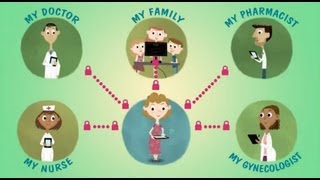 (Female narrator)
 Good afternoon, everyone. Welcome to all of our participants. I'm Jason Goldwater and I work for the National Human Research Center. I'll be the moderator for today.